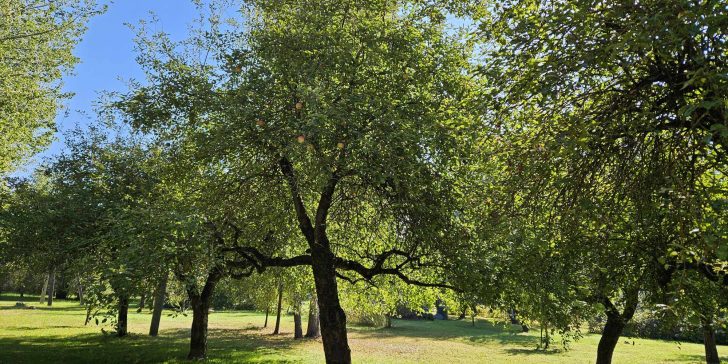
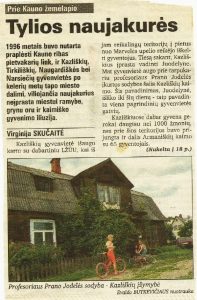
SENASIS OBELŲ SODAS – likęs nuo buvusio Mičiurino tarybinio ūkio-technikumo laikų. Sodas buvo nuolat prižiūrimas Narsiečių gyventojų, todėl jų dėka ir turime išlikusių senųjų obelų.
„Pietinėje gatvės pusėje, kur sovietmečiu plytėjo medelynas, kuriasi naujas miesto rajonas, pavadintas Narsiečiais. Šis pavadinimas, matyt, kildinamas iš tarpukario laikų, kai šioje vietovėje ūkininkavo žemes gavę narsūs nepriklausomybės kovų savanoriai” – iš dienraščio Kauno diena.
TYLIOS NAUJAKURĖS_NARSIEČIŲ PRADŽIA
The Old Apple Orchard remains from the time of the former Mičiurinas Soviet agricultural technicum. The orchard was consistently looked after by the residents of Narsiečiai, and thanks to them, we have preserved the old apple trees.
„On the south side of the street, where the arboretum stretched during the Soviet era, a new city district is being created – Narsiečiai. The name apparently originates from the interwar period, when brave volunteers of the independence wars, who had been granted land, farmed in this area,” from the daily newspaper Kauno diena.
QUIET SETTLERS_THE BEGINNINGS OF NARSIEČIAI
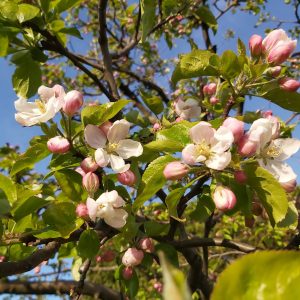
Obelis lietuvio širdyje – vienas artimiausių ir brangiausių medžių. Jos žydėjimo laukta su džiaugsmu – baltas žiedų debesis primindavo pavasario atgimimą ir brangiausią žmogų – mamą. Vėliau džiaugtasi augančiais, nokstančiais obuoliais. Rudenį nuskinti jie džiugindavo visą žiemą. Sakydavo: „Obuolys į namus – ligos iš namų.“ Ir šiandien dažnas lietuvis turi savo obelį kieme, sodyboje – miela pasėdėti po ja, kai byra žiedlapiai ar ant šakų sūpuojasi sunokę vaisiai. Obelis – tarsi širdies medis, poetams lyg mūza, lyg MAMA, juk kiekvienas esame girdėję pasakymą – „Kaip obelis, mamyt, palinkus…“ Kai ji pražysta, atrodo, kad pats dangus nusileidžia į žemę – balti žiedai kvepia pavasariu, vaikyste primindami mamos šilumą. Kiek dainų parašyta, kiek eilių sudėliota – obelis, obelėlė…
„Aš jau nepakeliu minčių apie tave kaip obelis, apsunkusi nuo vaisių…“
„Šią naktelę per naktelę nemigau, nemigau, su broleliu obelėlę sodinau, sodinau…“
„Matos iš tolo baltos langinės, obelys žydi, juokias merginos, puošiasi mūsų žemė geroji, lietui praėjus, kvepia, garuoja, sužydėjus vėl sodams kaime, per gimtinę einu…“
Nemune ledai išplauks,
Obelys pabals.
Parymok, manęs palauk
Prie baltos obels.
______________________________________________________________________________
The apple tree holds a special place in the heart of a Lithuanian – one of the closest and most cherished trees. Its blossoming was awaited with joy: a white cloud of flowers reminded people of the spring’s revival, and the dearest person of all – one’s mother. Later, all rejoiced in the growing, ripening apples. Harvested in autumn, they brought joy throughout the winter. People used to say, “An apple a day keeps the doctor away.” Even today, many Lithuanians have their own apple trees in the yard or homestead; it is a pleasure to sit beneath it as petals fall or as ripe fruit sway on the branches. The apple tree is a tree of the heart: a muse for poets, a mother. After all, everyone has heard the saying: “Like an apple tree, a mother is hunched…” When it blossoms, it seems as though the sky itself descends to earth, white flowers smell like spring, reminding of childhood, and of mother’s warmth. How many songs and verses have been written, composed: apple tree, dear little apple tree…
“I can no longer bear thoughts of you, like an apple tree heavy with fruit…”
“All through the night, the long night, I could not sleep, I planted an apple tree with my brother…”
“From afar the white shutters can be seen, apple trees are blooming, girls are laughing, our good land adorns itself; after the rain it smells and steams, orchards blooming again in the village, I walk through my homeland…”
The ice in Nemunas will float,
The apple trees will turn white.
Linger, wait for me,
By the white apple tree.